The Speed Paradox

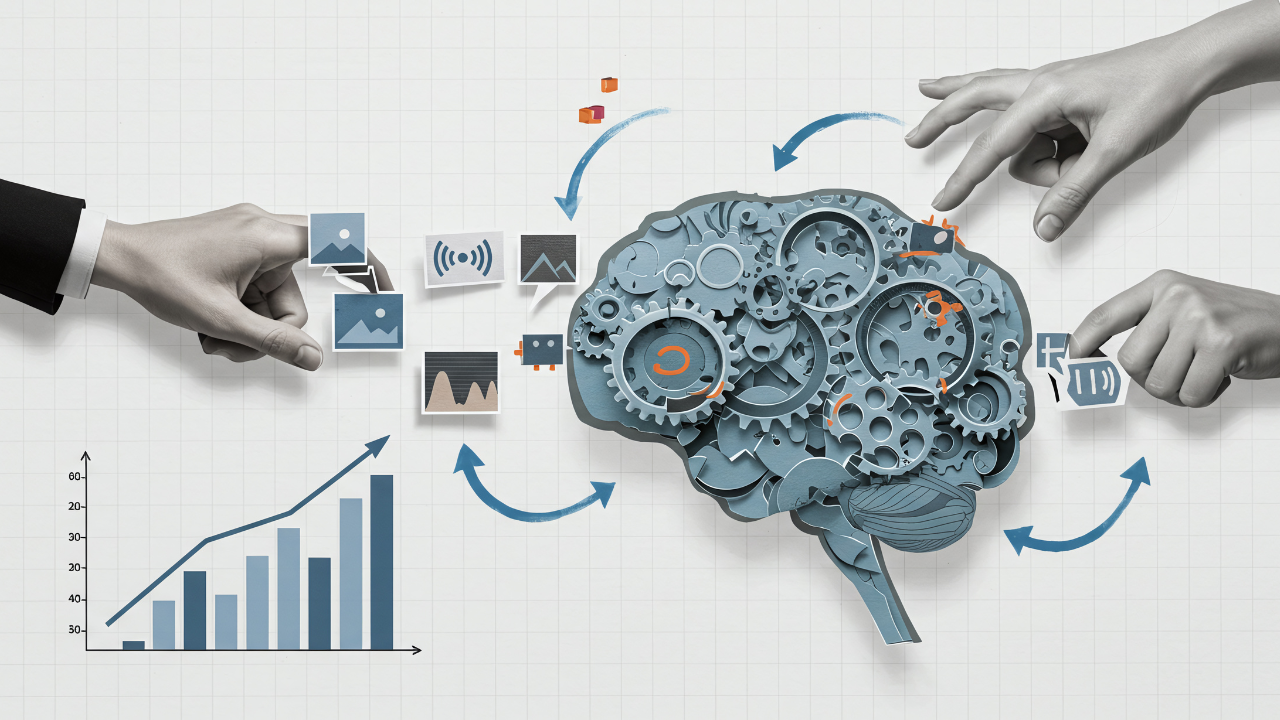
The Speed Paradox: In the Age of AI, Speed is Not a Choice, It’s a Matter of Survival Technological change is no longer progressing linearly; it is advancing at an exponential rate. In this era of transition, moving from generative AI to autonomous AI systems capable of self-planning and into the realm of robotic AI—the greatest cost for leaders is no longer making the wrong decisions, but the loss of…
Davos 2026 and the Future of Work

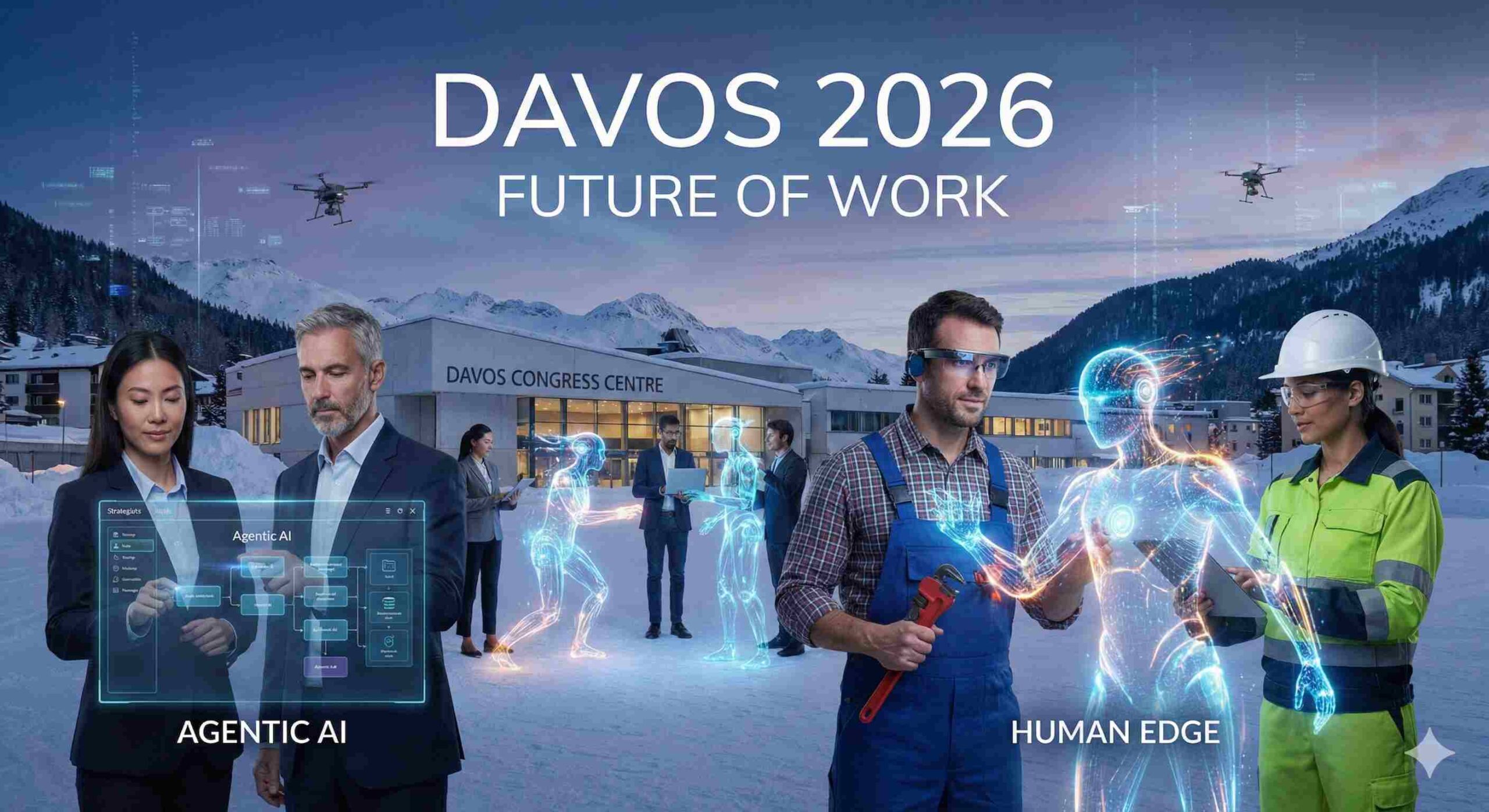
Agentic AI, Blue Collar, and New Competencies The World Economic Forum (WEF) 2026 meetings have concluded, leaving behind crucial data for the global economy and the business world. The question “Will AI take our jobs?”, which was frequently asked in previous years, seems to have given way to more solution-oriented and pragmatic approaches this year. An analysis of the discussions at the summit and the published reports reveals four main…

Energy Systems Engineering

Designing the Planet’s Energy: Energy Systems Engineering The biggest challenge of the 21st century is neither artificial intelligence nor space colonies. The real issue is overhauling the energy infrastructure of a planet inhabited by 8 billion people, without “pulling the plug.” The global goal of “Net Zero / Zero Carbon”—balancing the amount of greenhouse gases emitted into the atmosphere with the amount absorbed by the earth—is not just an environmental…

Competencies and The Power of Coaching in the Age of AI

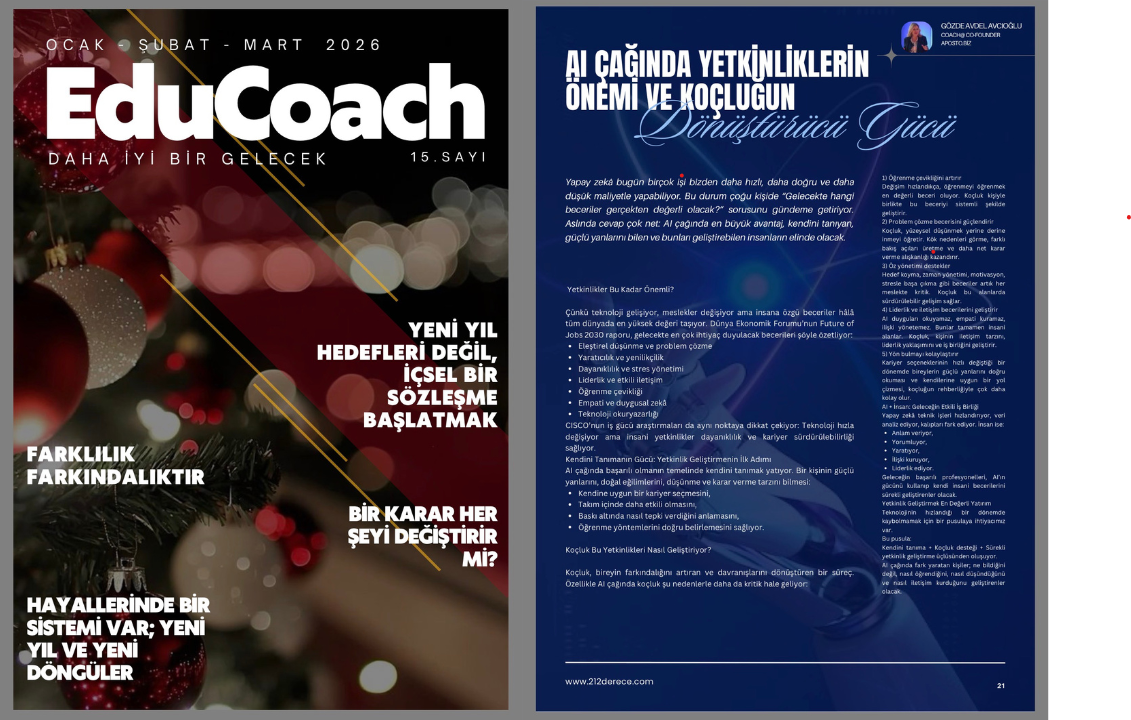
Artificial intelligence can now perform many tasks faster, more accurately, and at a lower cost than humans. This raises the question for many people: “Which skills will truly be valuable in the future?” The answer is clear: in the age of AI, the greatest advantage will belong to those who know themselves, understand their strengths, and are able to develop them. Read full article: Link

The New Luxury: Made by Human

One of the most frequently heard statements in the business world in recent years is this: “You won’t lose your job to artificial intelligence, but to someone who knows how to use it better than you do.” This statement is now true-but incomplete. As of 2025, using AI is no longer a special skill; it has become a basic requirement, as fundamental as knowing how to use office software. McKinsey’s…

Entrepreneurship for Admissions

How Do Entrepreneurship Certificates Impact University Admissions and Early Career Opportunities? Today, university admissions and the job market are shaped by the same major trend: academic achievement alone is no longer sufficient. Especially at selective universities and in high-technology sectors, students’ portfolios, real-world experience, and tangible outputs now play a critical role in evaluation. This shift is not merely anecdotal; it is increasingly supported by research data. 1) The Growing…

The Degree of World Leaders: PPE (Philosophy, Politics, and Economics)

There is a degree synonymous with Oxford University that has maintained its popularity for years: PPE. It is possible to see these three letters on the resumes of many figures, from British Prime Ministers to economists, strategists to journalists. So, what exactly is this degree, considered an interdisciplinary classic at the world’s leading universities (Oxford, Yale, LSE, Warwick), and why does it remain relevant today? 🧠 Three Distinct Disciplines, A…

MIT Report: How Is Artificial Intelligence Changing Careers?

Artificial intelligence has become embedded in nearly every aspect of our lives, but MIT’s newly released Iceberg Index brings the debate about the future of work onto a far more concrete foundation. According to findings published on November 26, 2025, AI can technically perform tasks currently carried out by 11.7% of the U.S. workforce. This corresponds to roughly $1.2 trillion worth of annual labor, and the impact extends far beyond…

Being Human in the Age of AI

“Being more human than artificial intelligence is the new competitive advantage.” Artificial intelligence is no longer about the future — it’s already shaping the present. It writes reports, talks to customers, evaluates candidates in recruitment, and even manages production lines. But amid all this acceleration, one critical question emerges: “What will the role of humans be?” The World Economic Forum’s Future of Jobs Report 2025 provides a clear answer: within…

Artificial Intelligence Engineering or Data Science?

There are two fields that form the invisible backbone of modern technology: Artificial Intelligence Engineering and Data Science.The first builds learning systems, while the second focuses on understanding and interpreting data.Although often confused, they differ significantly in their goals, methods and the way they approach problems. ARTIFICIAL INTELLIGENCE ENGINEERING Artificial Intelligence Engineering aims to equip computers with human-like thinking and decision-making abilities.Students specialize in core AI areas such as machine…